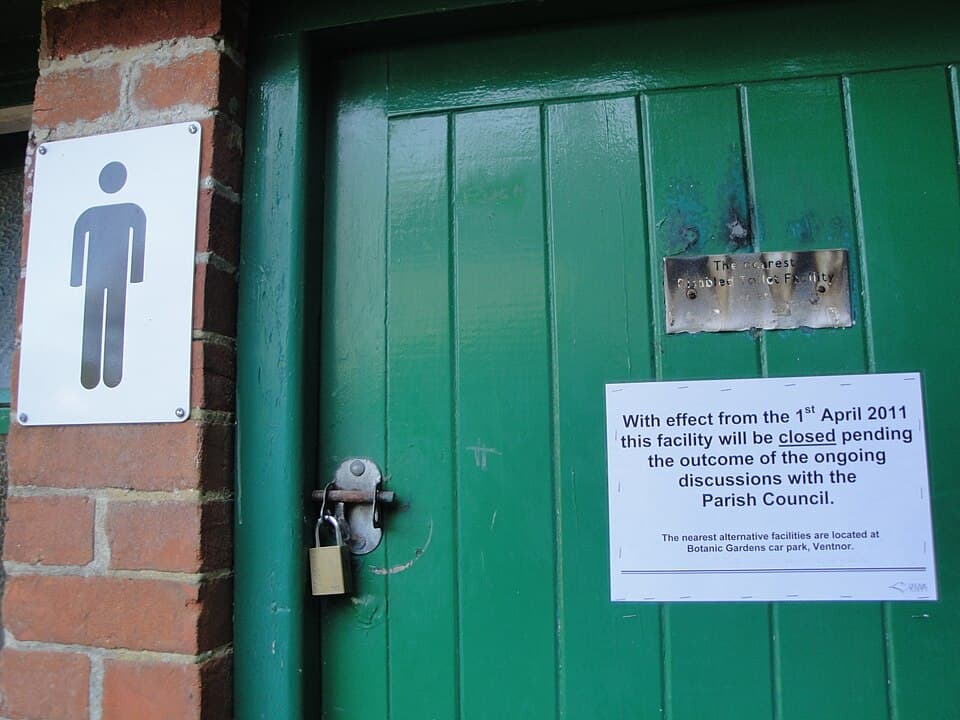
Refused Toilet Access by a Shop — Where You Legally Stand
By Daniel Wyd5 min readGuides & Advice
There is no general legal right in the UK to use a private business's toilet. That is true in England, Scotland, Wales and Northern Ireland. A café can refuse a passer-by, and it is not breaking the law by doing so.
But that is only half the position, and the half most people stop at. Where the person asking is disabled, a blanket refusal can become unlawful — and there is tribunal case law awarding compensation over exactly this issue. This guide sets out where the line falls.
The General Rule: No Right of Access
No statute obliges an ordinary business to admit any member of the public to its toilet. Customer-toilet, licensing and building requirements generally concern people already using the premises — they do not create a public right of entry for everyone passing.
A council in England or Wales can, where it has adopted the relevant power under section 20 of the Local Government (Miscellaneous Provisions) Act 1976, require toilets at certain entertainment or food and drink premises. Even then, that concerns facilities for people using those premises. It is not a universal right for anyone to walk in.
Where Disability Law Changes the Answer
In England, Scotland and Wales the Equality Act 2010 applies. In Northern Ireland it is the Disability Discrimination Act 1995 instead — a distinction often missed in advice written for a UK-wide audience.
Under section 29 of the Equality Act, a service provider must not discriminate in providing, or refusing to provide, a service. The reasonable adjustment duty applies. Two things follow that materially change the position:
- A blanket customers-only policy may require adjustment where it puts disabled people at a substantial disadvantage.
- Unfavourable treatment because of disability-related urgency can be "discrimination arising from disability" unless the business can objectively justify it.
Critically, the duty is anticipatory. A business is expected to think about disabled people in general in advance, not only to react once someone explains their condition at the counter.
Who Counts as Disabled Here
A person is disabled where a physical or mental impairment has a substantial and long-term adverse effect on normal day-to-day activities. "Long-term" generally means 12 months, likely to last 12 months, or for life. Recurring effects can count.
IBS, Crohn's disease, colitis and having a stoma are not automatically disabilities by diagnosis alone — coverage depends on the effect on you. Crohn's & Colitis UK confirms this directly. A permanent stoma will often meet the test, because continence and toileting are normal day-to-day activities, but it remains fact-specific.
Invisible disabilities are fully protected. Visibility is legally irrelevant if the definition is met, and the Equality and Human Rights Commission's retailer guidance says staff must support customers with less-visible disabilities.
Locked Accessible Toilets
Locking an accessible toilet is not automatically unlawful — it can protect the facility from vandalism, which is exactly why the National Key Scheme exists. What matters is whether the overall arrangement still gives disabled people reasonable access.
- Locked but openable with an NKS key — normally fine.
- Staff hold the only key and unlock promptly — usually acceptable, though independent access is better and delay can matter badly for urgent conditions.
- Staff refuse to unlock a working accessible toilet without good reason — a potential failure to make a reasonable adjustment. Unlocking a door is normally cheap and practical, which makes refusal hard to justify.
- Accessible toilet used as a storeroom — stronger evidence of a barrier.
What the Courts Have Actually Decided
Be sceptical of confident claims online that every shop must admit anyone with Crohn's. No reported appellate decision establishes that. The widely shared 2018 Zara incident was a news story, not a binding judgment.
The clearest verified UK decision is an employment case: Kane v Barclays Bank UK plc (Employment Tribunal 1403210/2019, judgment published 29 September 2020). An employee with Crohn's disease was not given sufficient toilet access, and the tribunal found the employer failed to make reasonable adjustments. It awarded £8,000 for injury to feelings plus £1,692.05 interest — £9,692.05 in total.
It is a first-instance tribunal decision, so persuasive rather than binding. But it shows toilet access is treated as a genuine adjustment issue, with real financial consequences.
What to Do If You Are Refused
- Say you have a medical condition needing urgent access. You do not have to name the diagnosis. A toilet access card makes this easier but is not required.
- Ask for the manager. Front-line staff often apply a policy they have no authority to vary.
- Ask how to complain — in writing, to head office. The anticipatory duty sits with the business, not the person on the till.
- Write down the date, time, branch and what was said while it is fresh, if you intend to pursue it.
- Consider a RADAR key for the future, which removes the need to ask at any facility on the scheme.
Key Resources
- Equality and Human Rights Commission: equalityhumanrights.com — guidance for service providers and retailers
- Equality Advisory and Support Service: equalityadvisoryservice.com — free advice on discrimination in England, Scotland and Wales
- Equality Commission for Northern Ireland: equalityni.org — the DDA applies in NI, not the Equality Act
- Citizens Advice: citizensadvice.org.uk — help with complaints and next steps
Frequently Asked Questions
Can a shop legally refuse to let me use the toilet?
Yes, as a general rule. No UK law gives the public a right to use a private business's toilet. The exception is where you are disabled within the meaning of the Equality Act 2010 and refusing puts you at a substantial disadvantage — then a blanket policy may need adjusting.
Is refusing someone with Crohn's or IBS automatically illegal?
No. Three things must line up: you must fall within disability law, the request must relate to the business's provision of services, and the adjustment must be reasonable. Safeguarding, genuinely hazardous staff areas or having no usable toilet can all be relevant factors.
What if staff say the accessible toilet key is lost or they are too busy?
Unlocking an existing working toilet is normally inexpensive and practical, so refusing without a sound reason risks being a failure to make a reasonable adjustment. Ask for a manager, then complain in writing to head office, recording the date, time and branch.
Daniel Wyd
Founder and editor of ToiletNearMe, a free UK public toilet finder covering 11,693 listings. More about the site.