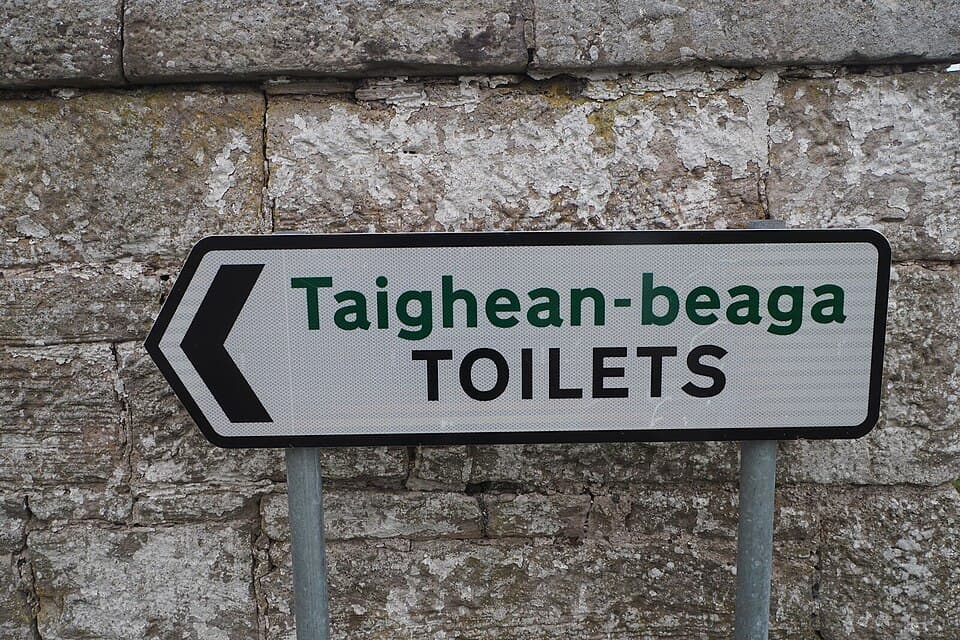
UK Public Toilet Law — Your Legal Rights, the Equality Act & the Community Toilet Scheme
By Daniel Wyd5 min readGuides & Advice
Britain has lost approximately 50% of its public toilets over the last decade. A Liberal Democrats analysis (2024) found public toilet numbers fell by 14% in just five years from 2018/19 to 2023/24 — from 531 to 459 across 45 surveyed councils. Age UK London's January 2025 report found 97 council toilets closed in London in a single year versus only 32 opened.
The core legal reason for this crisis: there is no statutory duty on local councils to provide public toilets. This guide explains what UK law actually says, what your rights are, and what practical tools exist to help you.
Is There a Legal Right to Public Toilets in the UK?
No — and this is the fundamental problem. Local authorities lost their statutory duty to provide public conveniences under the Local Government Act 1972. No replacement duty was created. Without a legal obligation, cash-strapped councils facing 28% real-terms funding cuts since 2010 have closed toilets as a non-statutory cost saving.
The RSPH's landmark "Taking the P" report (2019) found 74% of the public say there are not enough toilets in their area — and 1 in 5 people, rising to 2 in 5 (43%) for people with medical conditions, experience a "loo leash": restricting how far they travel from home based on toilet availability.
Can a Business Legally Refuse You Toilet Access?
Yes — in most cases. There is no universal legal right for a member of the public to use a private business's toilet. A business can legally refuse non-customers access, as long as it does so consistently and without discriminating based on protected characteristics. However, there are important caveats:
- If refusal disadvantages a disabled person due to their disability, it may be unlawful under the Equality Act 2010, Section 20 (reasonable adjustments duty) or Section 29 (services duty)
- If refusal disadvantages a pregnant person because of their pregnancy, it may constitute pregnancy discrimination (Equality Act 2010, Section 18)
- A Just Can't Wait card (Bladder & Bowel UK) or Can't Wait card (Crohn's & Colitis UK) can be shown to request access on medical grounds — even where no legal right technically exists
The Equality Act 2010 — What It Covers
The Equality Act 2010 is the most relevant law for toilet access in the UK:
- Section 20 — Reasonable adjustments: Service providers must take reasonable steps to avoid substantial disadvantage to disabled people. This includes providing or facilitating toilet access
- Section 29 — Services and public functions: Providers cannot discriminate against people with protected characteristics (disability, pregnancy, age, sex, etc.) in providing services
- Protected characteristics relevant to toilet access: disability, pregnancy and maternity, age (particularly relevant for older people with urgency conditions)
Building Regulations — What New Buildings Must Provide
- Approved Document M: Requires accessible toilet provision in new non-residential buildings — but applies only to new builds, not existing premises
- Building (Amendment) (England) Regulations 2024: Introduced Part T (Toilet Accommodation) as a statutory requirement for new non-residential buildings, covering sex-separated toilets and accessible provision
- Changing Places (from 1 January 2021): Mandatory in certain large new public buildings — shopping centres, entertainment venues, transport hubs, hotels, cinemas, and more. Approximately 150+ new buildings per year are affected
Building regulations create a duty for new buildings. They do not retroactively apply to existing premises — hence why millions of existing businesses are not legally required to provide any toilet access.
The Community Toilet Scheme
The Community Toilet Scheme (CTS) is the UK's primary mechanism for replacing closed council toilets without building new ones. Councils pay participating businesses (pubs, cafés, restaurants, shops) an annual fee to open their toilets to the public without requiring a purchase. Businesses display a window sticker to indicate participation.
Notable UK schemes:
- Richmond upon Thames: The UK's longest-running CTS, celebrating its 20th anniversary in December 2024, with over 70 participating locations
- Tower Hamlets: Launched a new CTS in summer 2024 with 85+ participating businesses — following years without a scheme
- Lewes, Eastbourne, Merton, Wealden, Sheffield: Active schemes
- Cheltenham Borough Council uniquely requires pubs and restaurants to provide toilet access to customers as a licensing condition
The limitation: the scheme is entirely voluntary for both councils to run and businesses to join. There is no national coordination or central map. 18 of 33 London boroughs have no CTS at all.
What Campaigners Are Calling For
- A statutory duty on local councils to provide public toilets — removing the current discretionary basis
- A national Community Toilet Scheme with consistent requirements and public mapping
- Mandatory toilet provision in all new large commercial buildings
- Ring-fenced government funding for public toilet infrastructure
- Crohn's & Colitis UK's 2021 position statement, the London Loo Alliance (formed 2024), Age UK London, and Bladder & Bowel UK are among the organisations actively campaigning on these issues
Key Tools for Finding Toilets Now
- Our toilet finder: 40,000+ UK locations, filterable by accessible, free, baby changing, RADAR key, Changing Places
- RADAR key (£5, Disability Rights UK): Unlocks 9,000+ locked disabled facilities nationwide — see our RADAR key guide
- Just Can't Wait card (free, Bladder & Bowel UK): Show to request urgent access on medical grounds
- Great British Public Toilet Map: toiletmap.org.uk — 14,000+ crowdsourced listings
Frequently Asked Questions
Is it illegal to refuse someone toilet access in the UK?
No universal law makes it illegal to refuse toilet access to non-customers. However, if refusal disadvantages someone with a disability, pregnancy, or other protected characteristic, it may be unlawful under the Equality Act 2010. A Just Can't Wait or Can't Wait card helps you request access on medical grounds.
Why are there so few public toilets in the UK?
Local councils have no statutory duty to provide public toilets — they lost it under the Local Government Act 1972. Combined with real-terms funding cuts of 28% since 2010, councils have closed toilets as a non-statutory cost saving. UK public toilet numbers have fallen by approximately 50% in the last decade.
What is the Community Toilet Scheme?
A local council initiative where councils pay businesses to open their toilets to the public without requiring a purchase. Businesses display a window sticker. The UK's longest-running scheme is in Richmond upon Thames, marking 20 years in December 2024. There is no national scheme — coverage depends entirely on whether your local council operates one.
Daniel Wyd
Founder and editor of ToiletNearMe, a free UK public toilet finder covering 11,693 listings. More about the site.