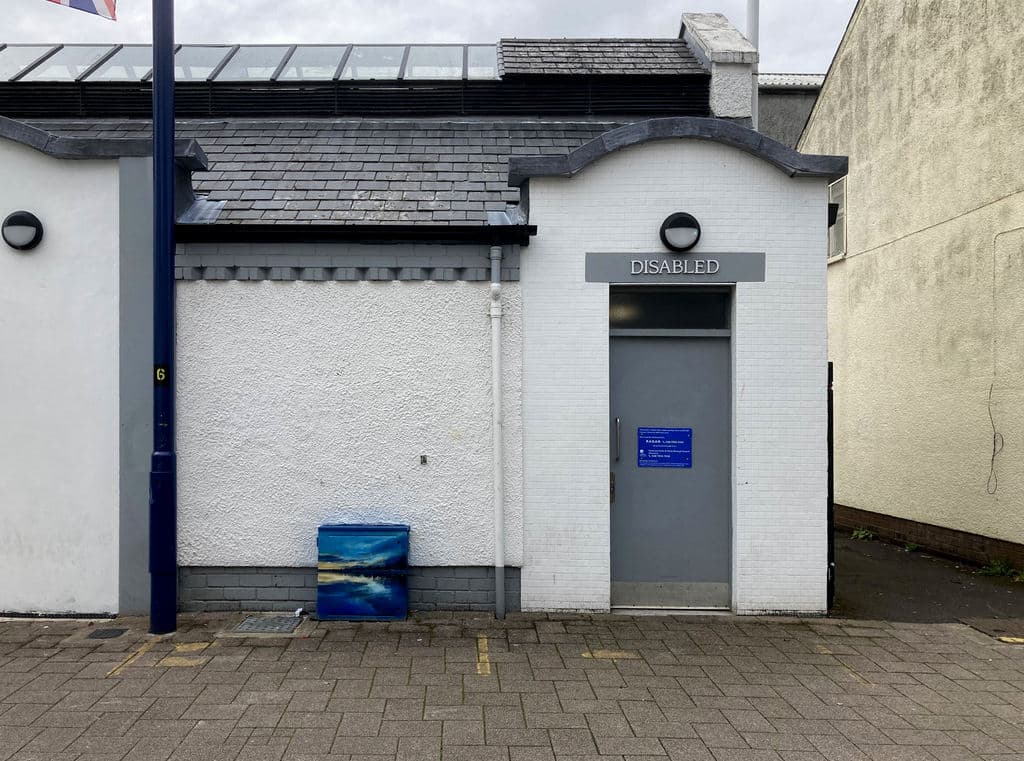
The Complete Guide to Accessible Toilets and Disabled Facilities in the UK
By Daniel Wyd4 min readAccessibility & Health
Around 14.6 million people in the UK have a disability — approximately 22% of the population. Of those, roughly 250,000 people cannot use standard accessible toilets and need specialist Changing Places facilities: people with cerebral palsy, muscular dystrophy, motor neurone disease, multiple sclerosis, profound learning disabilities, and others. This guide covers every aspect of accessible toilet access in the UK — from RADAR keys to Changing Places, legal rights to practical tips.
RADAR Keys — The National Key Scheme
The National Key Scheme (NKS), historically known as the RADAR key scheme, gives access to over 9,000 locked disabled toilet facilities across the UK. These are in shopping centres, railway and bus stations, pubs, cafés, department stores, motorway services, and leisure venues — wherever you see a NKS lock on an accessible cubicle door.
A genuine RADAR key costs £5 from Disability Rights UK (disabilityrightsuk.org) — the official and authorised source. Only purchase from Disability Rights UK or trusted sources to ensure the key works on all registered NKS locks. Use our RADAR key toilet finder to locate registered sites near you.
Many disability charities also provide RADAR keys to members: Crohn's & Colitis UK, Bladder & Bowel UK, Muscular Dystrophy UK, and others. Check with your relevant charity before paying separately.
Changing Places Toilets
A Changing Places toilet is fundamentally different from a standard accessible toilet. It must include:
- A height-adjustable adult changing bench
- A ceiling track hoist (or mobile hoist) capable of supporting adult weight
- A peninsular toilet with space on both sides for carers
- Adequate space for the wheelchair user plus two carers
- A privacy screen between the toilet and changing bench
- A centrally placed toilet to allow transfer from either side
Standard disabled toilets — even large ones — do not include these features. For many people with complex disabilities, a standard accessible toilet simply cannot be used.
Changing Places Numbers in the UK
As of 2024:
- 2,546 registered Changing Places toilets across the UK
- 414 new Changing Places toilets installed in 2024 — the highest annual figure ever recorded
- 94 in Wales, 67 in Northern Ireland
- Scotland: £10 million Scottish Government investment in the Changing Places Scotland Fund, 2025–27
- The £30 million England Changing Places Fund closed on 31 March 2025
The number is growing rapidly, partly due to a key regulatory change.
Mandatory Changing Places — The 2021 Building Regulation Change
From 1 January 2021, Approved Document M amendments made Changing Places toilets mandatory in certain new large publicly accessible buildings in England. These include:
- Assembly and entertainment venues with capacity 350+
- Shopping centres of 30,000m²+
- Retail premises of 2,500m²+
- Sports and leisure buildings over 5,000m²
- Stadia, theme parks, zoos, and exhibition centres with capacity above 2,000
- Hotels with leisure facilities; motorway services; places of worship; conference centres; theatres; cinemas; further education colleges
The government estimated this would affect 150+ new buildings per year. All such buildings opened after 1 January 2021 must have a Changing Places toilet. To find one, use the official register at changing-places.org or our Changing Places finder.
Your Legal Rights
- Equality Act 2010, Section 20: Service providers must make reasonable adjustments to avoid substantial disadvantage to disabled people — including toilet access
- Equality Act 2010, Section 29: Providers of services to the public must not discriminate in how they provide those services
- Building Regulations Part M: Requires accessible toilet provision in new non-residential buildings
- Building (Amendment) (England) Regulations 2024: Introduced Part T (Toilet Accommodation) as a statutory requirement for new non-residential buildings
Practical Tips
- Get a RADAR key (£5 from Disability Rights UK) — it unlocks 9,000+ facilities nationwide
- Check changing-places.org or our Changing Places finder before visiting any new location
- Use AccessAble (accessable.co.uk) for detailed access guides to specific venues — including transfer space, hoist type, door weight
- Consider the Hidden Disabilities Sunflower Lanyard (free at airports, major stations) to signal to staff that you may need assistance
- Plan ahead for events and festivals — many outdoor events now hire portable Changing Places units
Key Organisations
- Disability Rights UK: disabilityrightsuk.org — RADAR keys (£5), national campaigns
- Changing Places Consortium: changing-places.org — official registry, 2,546 locations
- Muscular Dystrophy UK: musculardystrophyuk.org — led the Changing Places campaign nationally
- Bladder & Bowel UK: bbuk.org.uk — free RADAR key home delivery, Just Can't Wait card
Frequently Asked Questions
How many Changing Places toilets are there in the UK?
As of 2024, there are 2,546 registered Changing Places toilets in the UK. 414 new facilities opened in 2024 — the highest annual total ever. Find the nearest one using our Changing Places finder or the official register at changing-places.org.
What is the difference between a standard disabled toilet and a Changing Places toilet?
A standard accessible toilet has a grab rail and turning space. A Changing Places toilet additionally has an adult-sized height-adjustable changing bench, ceiling hoist, peninsular toilet, and space for two carers — essential for around 250,000 people in the UK with complex disabilities.
Where can I buy a RADAR key?
RADAR keys cost £5 from Disability Rights UK (disabilityrightsuk.org) — the only official source. Many disability charities also provide keys to their members. Only buy from official sources to ensure the key works on all 9,000+ NKS locks.
Daniel Wyd
Founder and editor of ToiletNearMe, a free UK public toilet finder covering 11,693 listings. More about the site.